

How Do Plumbers Diagnose Water Heater Problems?
Plumbers begin by inspecting the water heater and asking about the symptoms. They may check whether the unit produces enough hot water, makes unusual noises, leaks, or fails to heat water altogether.
For electric models, the technician can inspect the power supply, heating elements, thermostats, wiring, and electrical connections. Gas water heaters require inspection of the pilot system, burner, gas supply, thermostat, and ventilation.
The plumber also checks water connections, valves, and the tank itself for corrosion or leaks. Proper diagnosis matters because similar symptoms can have different causes. For example, lukewarm water could result from a faulty thermostat, damaged heating element, or sediment buildup.
Once the cause is identified, the plumber can recommend the appropriate repair rather than replacing parts unnecessarily.
How Are Faulty Heating Elements Repaired?
Electric water heaters use heating elements to warm the water inside the tank. When an element fails, homeowners may experience lukewarm water or run out of hot water faster than usual.
Before repairing an element, a plumber shuts off the electrical supply and tests the component to confirm the failure. This is important because electric water heaters operate with high-voltage electricity.
If the element is defective, the technician removes it and installs a compatible replacement. The plumber may also inspect the surrounding area for mineral deposits or corrosion that could affect performance.
Heavy mineral buildup can make heating elements work harder and reduce efficiency. Replacing a damaged element and addressing buildup can help restore normal hot water production.
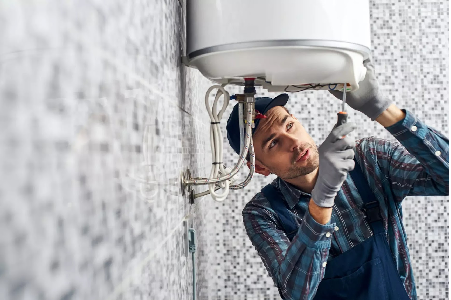
What Happens When a Thermostat Fails?
The thermostat regulates water temperature inside an electric water heater. If it malfunctions, the water may become too cold, too hot, or inconsistent.
A plumber tests the thermostat and its electrical connections to determine whether it is operating correctly. If the component has failed, replacing it can restore proper temperature control.
Temperature settings also matter. Excessively high settings can increase the risk of burns and waste energy, while low settings may not provide enough hot water for household needs.
If thermostat problems keep returning, the plumber may inspect the heating elements, wiring, and other components. Fixing the underlying issue can help prevent another failure.
How Do Plumbers Repair Leaking Water Heaters?
A leaking water heater should be inspected promptly. Plumbers first determine exactly where the water is coming from because the solution depends on the location and severity of the leak.
Leaks may develop around supply connections, drain valves, pressure relief valves, or other fittings. If a connection is loose, the plumber may tighten or reseal it. A damaged valve or fitting can often be replaced without replacing the entire unit.
A leak from the tank itself is more serious. Corrosion can eventually create holes in the tank, and a severely corroded tank generally cannot be repaired reliably.
A plumber Cleveland OH homeowners call can also inspect nearby flooring and walls for moisture damage. Prompt repairs can help reduce the risk of expensive property damage.
How Is Sediment Buildup Removed?
Minerals and sediment can collect at the bottom of a storage water heater. Over time, this buildup can reduce efficiency and contribute to popping, rumbling, or crackling noises.
Plumbers can flush the tank to remove accumulated sediment when the condition of the unit allows it. The technician manages the water and energy supply, drains the tank, and introduces fresh water to help clear deposits.
However, flushing is not always appropriate for an extremely old or heavily corroded water heater. A professional should evaluate the tank before deciding whether cleaning is worthwhile.
Regular maintenance can help reduce sediment-related problems and keep the water heater operating more efficiently.
What If Water Pressure Is Too High?
Excessive water pressure can put additional stress on water heaters, pipes, valves, and plumbing connections. It may contribute to leaks or cause the temperature and pressure relief valve to discharge water.
A plumber can test household water pressure and inspect the pressure-reducing valve. If the valve is malfunctioning, adjustment or replacement may be necessary.
The expansion tank may also need inspection. In closed plumbing systems, water expands as it heats, and an expansion tank helps accommodate that increased volume.
A properly functioning temperature and pressure relief valve is another important safety feature. It should never be blocked or disabled to stop water from escaping.

How Are Gas Water Heater Problems Fixed?
Gas water heaters use burners to heat water, so proper combustion, gas supply, and ventilation are essential. Problems may involve the pilot system, burner, thermocouple, thermostat, or gas supply.
A plumber can inspect the unit and determine why the pilot will not stay lit or why the burner is not operating correctly. Dirt and debris around the burner may also interfere with proper operation.
Ventilation is especially important with gas appliances because combustion gases must safely exit the home. A blocked or damaged vent can create a serious safety concern.
Because gas systems require careful handling, homeowners should avoid attempting complex repairs themselves. Professional inspection helps ensure the water heater operates safely.
When Should a Water Heater Be Replaced?
Many water heater problems can be repaired, including faulty thermostats, heating elements, valves, and certain connection leaks. However, replacement may make more sense when a unit is old, repeatedly failing, or severely corroded.
A leaking tank is one of the clearest signs that replacement may be necessary. Once the tank has corroded through, repairing the metal is generally not a dependable long-term solution.
Frequent repairs can also become expensive compared with installing a newer, more efficient water heater. A professional can consider the unit’s age, condition, repair costs, efficiency, and household hot water needs.
A plumber Cleveland OH homeowners rely on can explain whether repairing the existing unit or replacing it offers better long-term value.
How Can Homeowners Prevent Water Heater Problems?
Routine maintenance can help identify problems before they become major failures. Homeowners should watch for leaks, unusual noises, rusty water, inconsistent temperatures, and other changes in performance.
Depending on the system and local water conditions, periodic tank flushing can help control sediment. A plumber can recommend an appropriate maintenance schedule.
Homeowners should also avoid ignoring small leaks or pressure issues. A minor plumbing problem can become much more expensive if it causes water damage or contributes to equipment failure.
Professional inspections can identify aging components and help homeowners plan for replacement before an unexpected breakdown occurs.
Conclusion
Water heater problems can result from faulty heating elements, defective thermostats, sediment, leaks, excessive pressure, gas system issues, or tank corrosion. Professional plumbers diagnose the source before determining whether a component can be repaired or the entire unit should be replaced.
Regular maintenance and early attention to warning signs can improve reliability and help prevent costly damage. If your water heater is leaking, producing inconsistent temperatures, making unusual noises, or failing to provide enough hot water, professional service can identify the cause.
For reliable plumbing assistance in Cleveland, contact Plunger Plumber. Call (216) 399-7569 to discuss your water heater problem and arrange professional plumbing service.